Club Night Report
Wednesday 14th October 2026
Club Night Photos for Wednesday 14th October 2026 - Guest Demonstrator: Steven Gordon
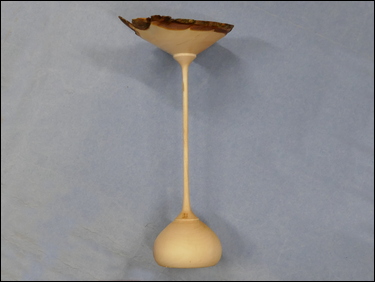
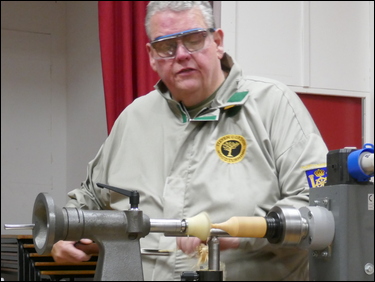
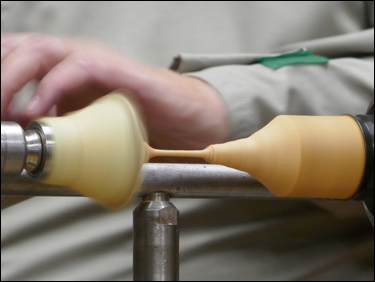
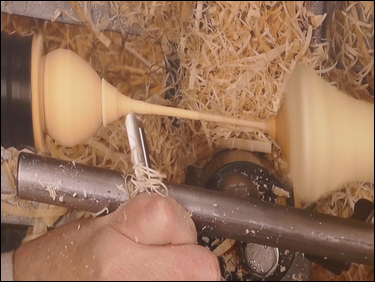
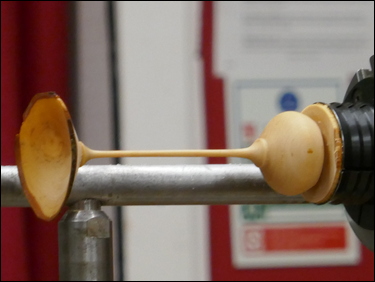
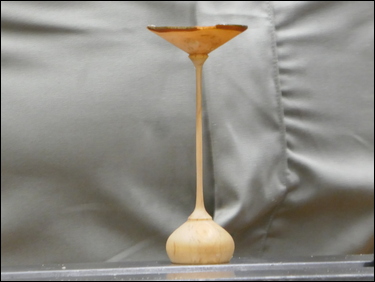
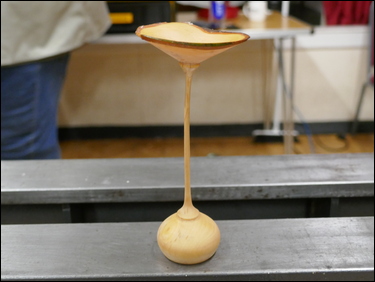
The demonstrator for the October 2026 meeting was a first time welcome to Steven Gordon (see website: www.stevengordonwoodturning.co.uk ).Steve began the evening with a brief introduction of himself and his career in woodturning. He announced that tonight he would be making a Flower - in very wet, hawthorn timber. This was to be a very different 'flower' to what one might expect - it was based on a 'V' shaped cocktail glass and would have a very thin (bark-on) flower head and a stem that was about 2 mm diameter, and be around 4 inches tall. There would be a lot of specific processes, methods and practices involved to ensure a good result.
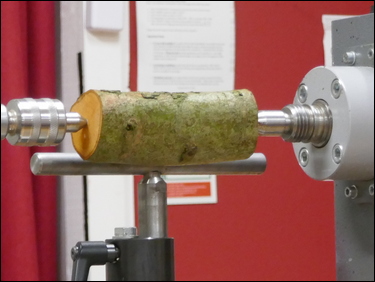
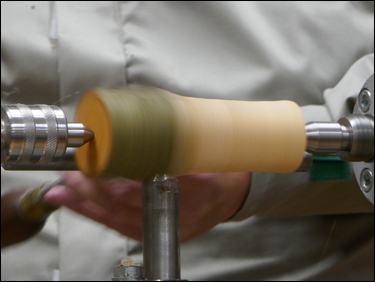
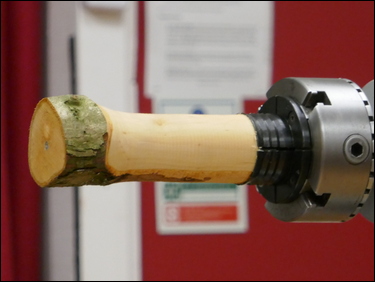
The timber was inspected to ensure that the pith was mounted off-centre - and would not be present in the stem. Mounted between centres - a Steb drive and a ring centre in the tailstock - the blank was rough turned to round and an accurate tenon cut at the headstock end.
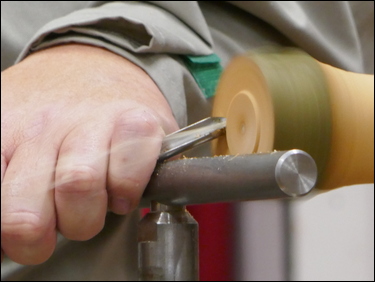
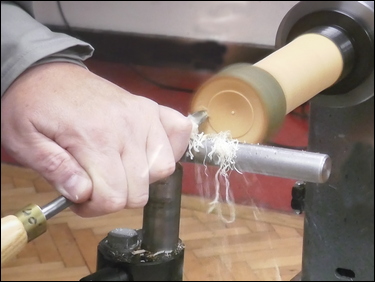
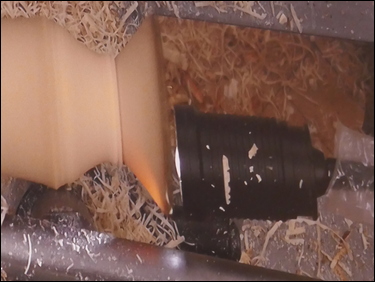
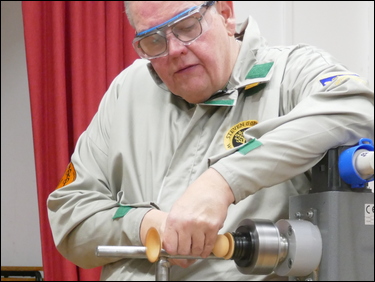
The part was mounted in a 4-jaw chuck on the tenon. Steve proceeded to hollow the head with a ½" spindle gouge - taking small controlled cuts with the bevel rubbing, to produce a smooth flowing shape. The flower head was cleaned up with a negative rake scraper. We were reminded of the benefit of using a negative rake scraper in that they tend not to self-feed - whereas, a regular single bevel scraper can self-feed and be 'grabby.' The head was wet sanded using a combination of mineral oil and beeswax, through the grits to 400 grit.
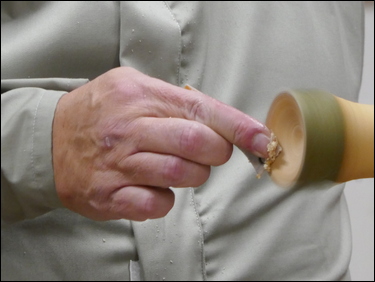
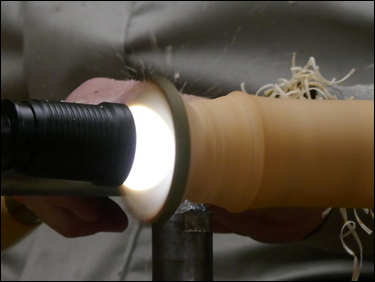
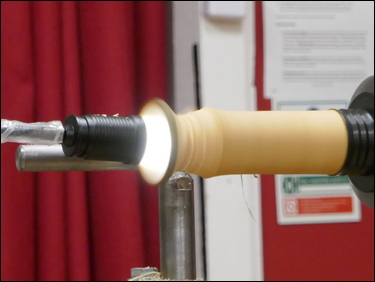
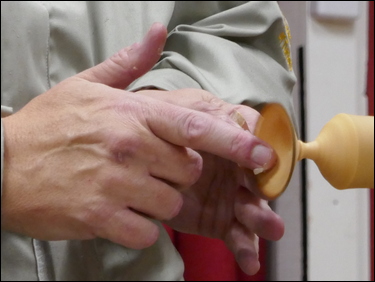
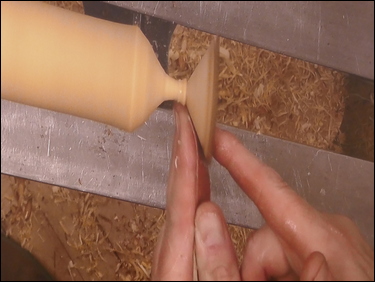
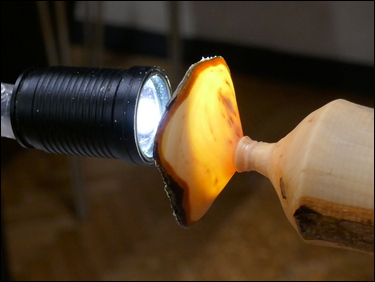
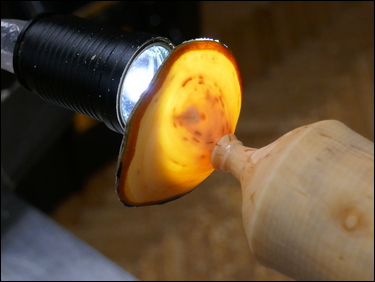
A strong light was mounted on the lathe bed and shone directly into the head. The area below was rough turned. Using the light shining through the wood to provide an indication of the wall thickness/ consistency, the head wall was reduced in thickness and checked with callipers. The outside was wet sanded (through the grits) with support from a (lubricated) finger on the inside - to resist flexing.
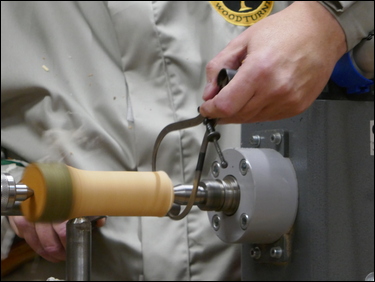
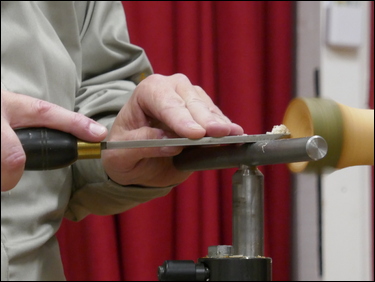
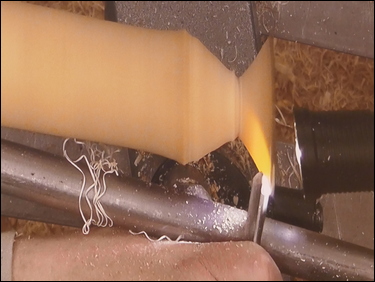
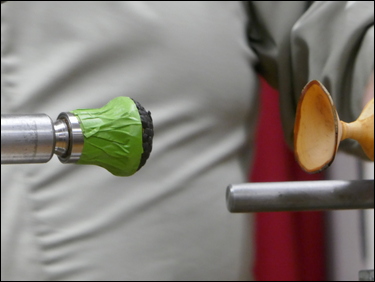
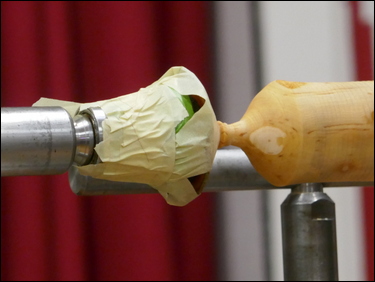
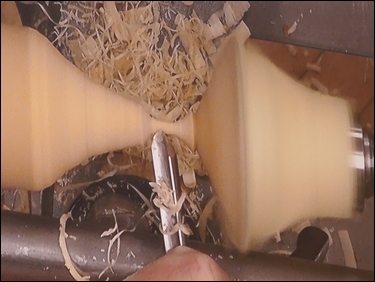
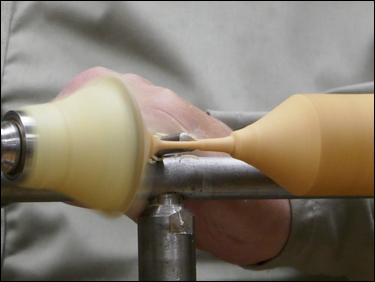
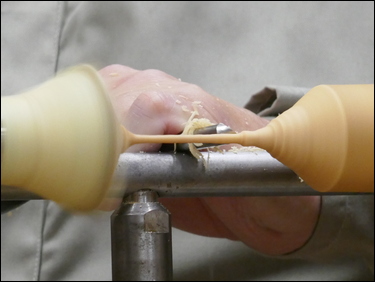
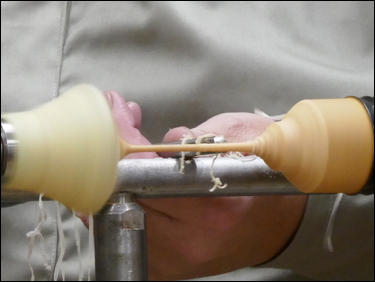
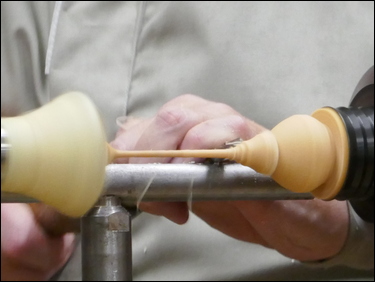
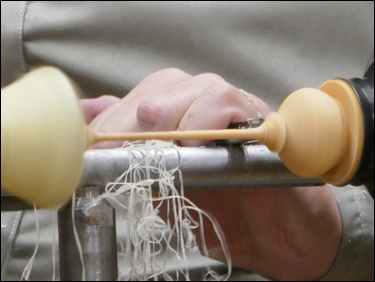
A padded support centre in the tailstock was brought up to the head and enough pressure was applied to just revolve the centre. Masking tape was used to secure the part and the padded centre to each other. The bead beneath the head was completed with a spindle gouge. The 'flower stem' was turned progressively along its length, in half-inch stages - roughed with a spindle roughing gouge and then finished with a small spindle gouge. Steve cautioned against using a skew chisel for turning such a thin spindle - as the timber had a tendency to 'climb' up the blade and snap the work. He said that even though he had made a 'large number' of these flowers - he still (for a number of different reasons) typically broke around 3 in 10 of them.
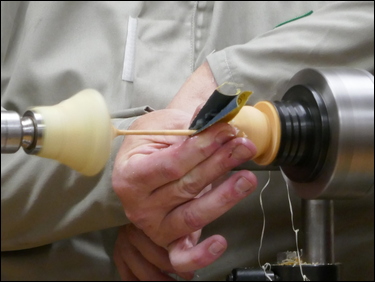
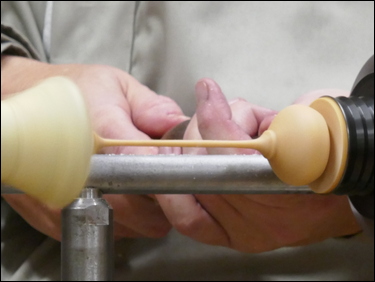
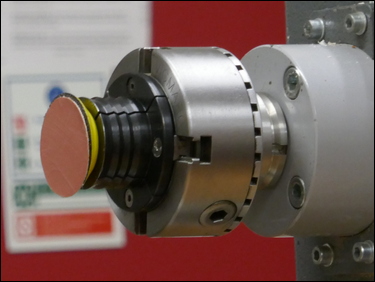
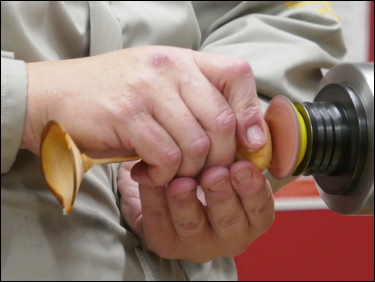
The stem was finish turned to the base and profiled to give an 'onion' shape. The stem was then finish sanded, as before - just pinching the stem on both sides, to apply even pressure - wet sanded - lubricated fingers - spindle speed turned right down. The base was slightly undercut with a parting tool - the masking tape was removed from the tailstock support and withdrawn. The part was then carefully parted off and the remaining stub sanded smooth via a sanding disc mounted in the chuck.
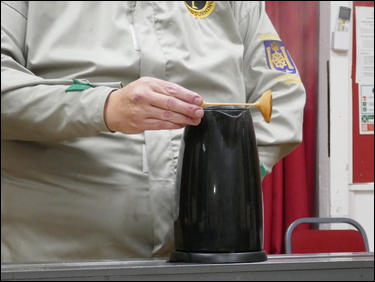
Steve commented that as the timber dried it would probably bend/ deform/ even twist at the stem. This could be enhanced/ controlled by steam bending the part via a kettle of boiling water and some gentle flexing - perhaps holding the 'bend' with an elastic band and leaving overnight to dry.
Steve presented us with an entertaining mix of anecdotes, stories, humour, opinions and experiences throughout the evening. Along with an impressive display of very precise tool handling skills, methods, and processes to produce an impressively thin item.
Thank you, Steve.
 |
 |
 |
 |
 |
 |
 |
 |
 |
 |
 |
 |
 |
 |
 |
 |
 |
 |
 |
 |
 |
 |
 |
 |
 |
 |
 |
 |
 |
 |
 |
 |
 |
 |
 |
 |
 |
 |
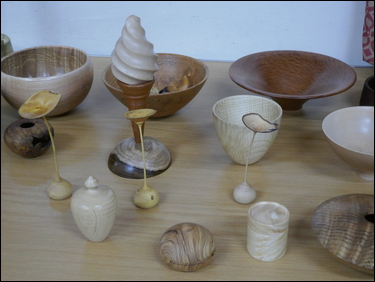
Display Table - this was well supported and had some interesting items on display:
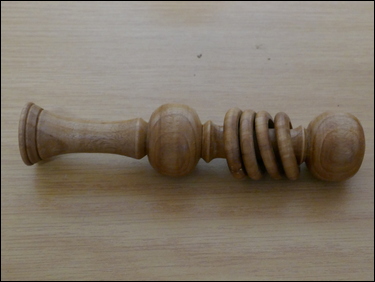
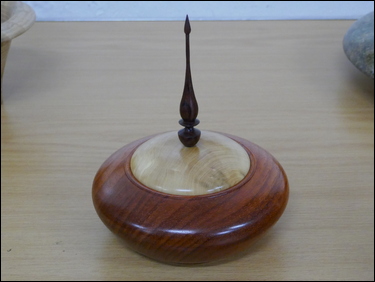
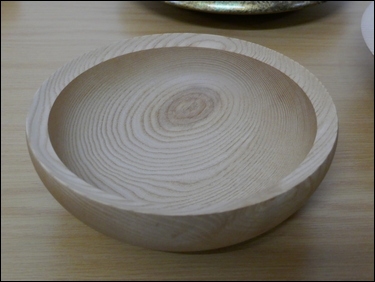
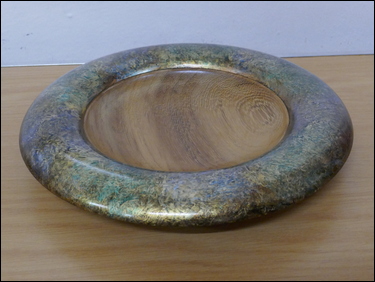
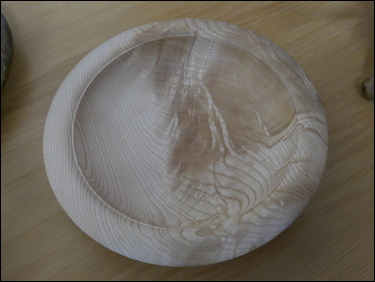
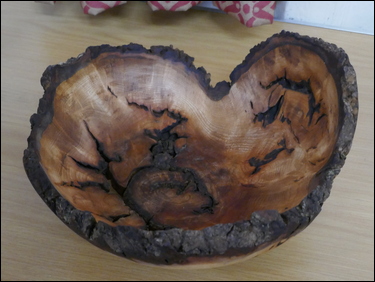
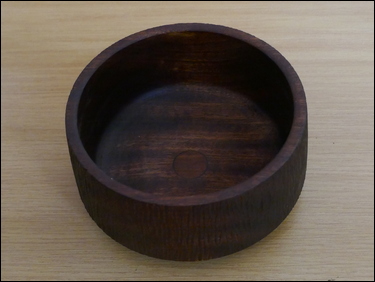
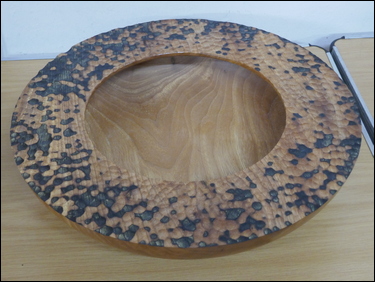
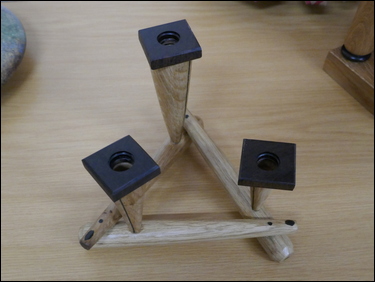
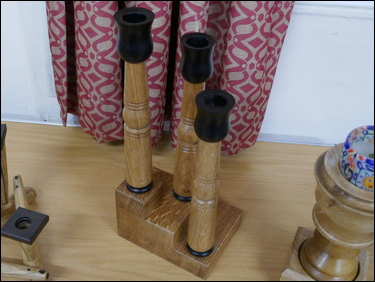
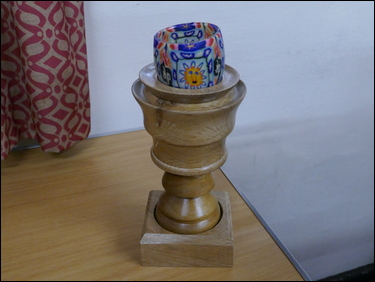
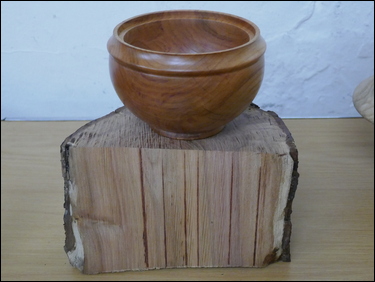
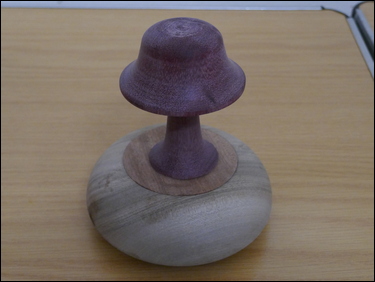
Paul Holland presented a lidded box in apple wood, an ash dish and bowl, along with a small scoop made in cherry. Bill Savage had made a child's rattle with captive rings. Dave Branscombe displayed four items - a lidded pot made in padauk for the pot, box for the lid and cocobolo for the finial, a large ash bowl, a large bowl made of iroko and coloured with Jo Sonja iridescent paints, and a large wide-rim bowl in figured ash. Don Webster presented natural edge bowl made of wych elm and a recent disaster of a bowl that he successfully restored. Frans Brown displayed a large wide rim elm bowl that he had textured with a ball cutter, scorched with a blow torch - which didn't really work - then re-mounted and refinished the face and re-textured with the ball cutter. Paul Kohn displayed two, three-piece candle holders made from an old oak church bench, with African blackwood features, along with a multi-part candle holder with a 'secret' compartment. Tim Mortimer showed a vase made of plum - sitting on the other half of the log he had made the bowl from. Will Moran presented a mushroom made of purpleheart mounted on a small box.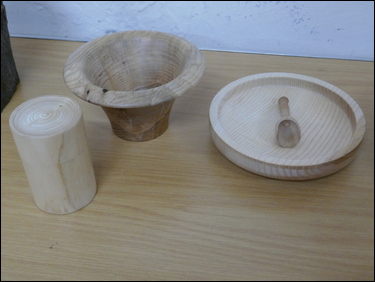 |
 |
 |
 |
 |
 |
 |
 |
 |
 |
 |
 |
 |
 |